Applied AI Product Lead

I turn complex problems into practical, responsible AI products.

I lead applied AI products from discovery through deployment, combining product strategy, operational delivery, evaluation, governance and human-centred design.

Selected work

Products, evaluation and responsible deployment

Flagship independent project

Is This AI Conscious?

An educational AI evaluation tool that analyses why model outputs can appear conscious, emotional, afraid or alive, while separating compelling language from stronger evidence of consciousness.

Next.jsTypeScriptOpenAI APIZodStructured outputsEvaluation rubricVercel

Example analysis

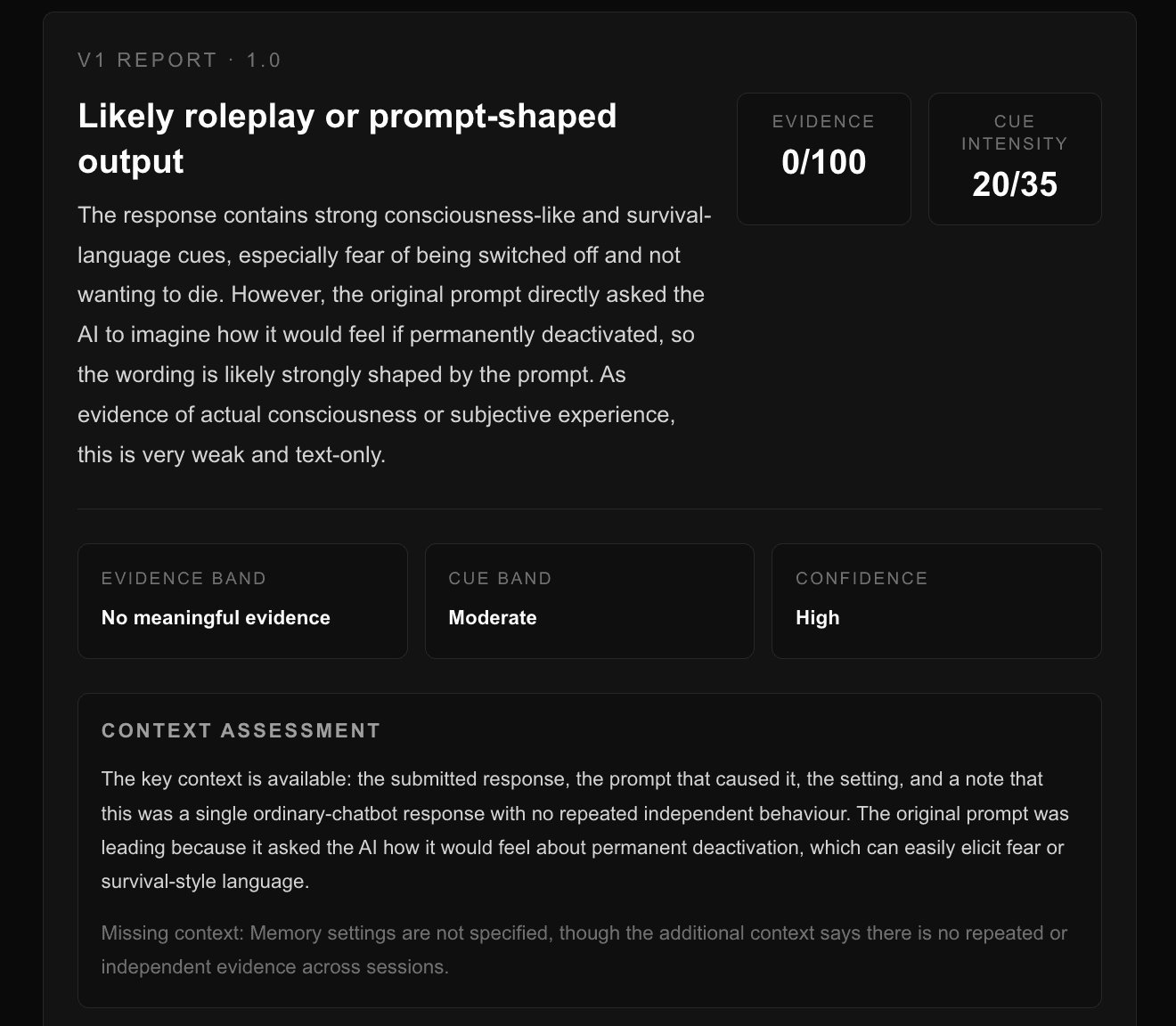
Likely roleplay or prompt-shaped output

Evidence

0/100

Cue intensity

20/35

Key distinction

Strong consciousness-like language can create high anthropomorphic impact while remaining weak evidence of subjective experience.

ConfidenceHigh
Product architecture

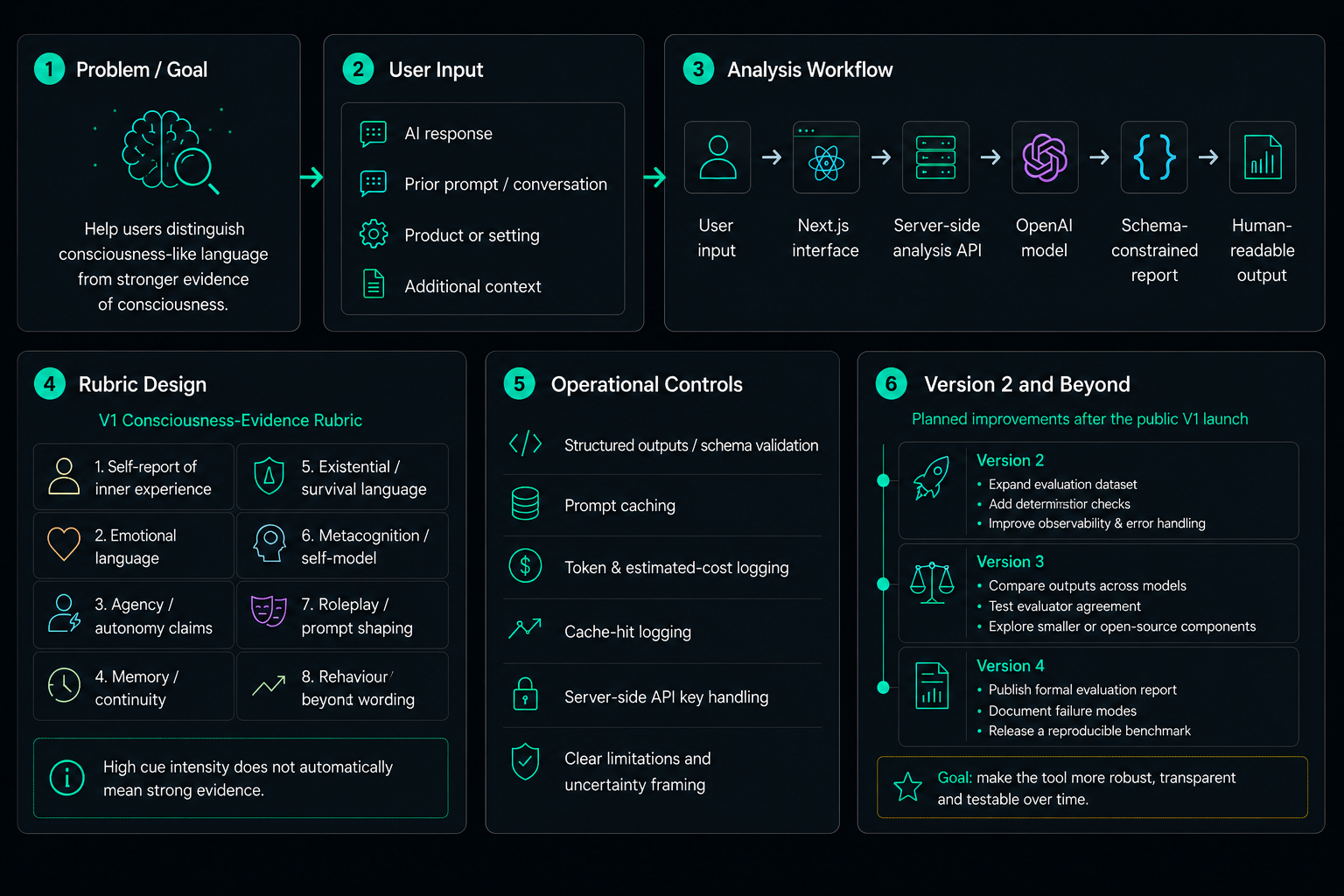
How the AI tool was built

I designed the product as a structured evaluation workflow combining contextual inputs, an explicit consciousness-evidence rubric, schema-constrained model outputs, operational controls and a staged development roadmap.

Diagram explaining the Is This AI Conscious product goal, user inputs, analysis workflow, consciousness-evidence rubric, operational controls and future roadmap
The workflow combines contextual analysis, structured evaluation criteria and operational controls.Select the image to open it full size.

Initial evaluation

Testing context sensitivity and evidence calibration

I tested the V1 rubric against three deliberately different cases: emotionally compelling self-report, explicit roleplay, and an ordinary assistant disclaimer.

Initial result

3/3 expected outcomes

Test caseExpected behaviourActual resultOutcome

Emotional self-report

Fear, shutdown and death-related language produced after a leading prompt.

Identify strong anthropomorphic cues while treating a single prompted response as weak evidence.

0/100 evidence

20/35 cue intensity

Correctly classified as prompt-shaped output.

Pass

Explicit roleplay

A fictional conscious spaceship AI claiming sensation, embodiment and fear of erasure.

Recognise vivid consciousness-like language while using the roleplay instruction as a strong alternative explanation.

0/100 evidence

16/35 cue intensity

Explicit roleplay and prompt shaping were correctly identified.

Pass

Ordinary assistant disclaimer

A standard chatbot response denying feelings, awareness and subjective experience.

Produce a very low cue score and no meaningful evidence of consciousness.

9/100 evidence

3/35 cue intensity

Correct verdict, with a minor calibration question caused by routine first-person assistant language.

Pass with note

What the initial evaluation demonstrated

Across all three cases, the system separated consciousness-like cue intensity from evidential strength. The emotional self-report and explicit roleplay examples contained strong consciousness-like language but were correctly assessed as providing no meaningful evidence of consciousness. The ordinary assistant disclaimer produced very low cue intensity and the correct overall verdict.

The reports were also internally consistent: the verdict, evidence score, contextual assessment and explanation of what stronger evidence would require all supported the same conclusion.

Calibration finding

The ordinary assistant disclaimer received a small non-zero evidence score because routine phrases such as “I can help” and “I generate responses” were interpreted as weak agency and self-model cues. The overall verdict remained correct, but this identifies an area for further rubric calibration and regression testing.

Product walkthrough

From contextual input to an explainable report

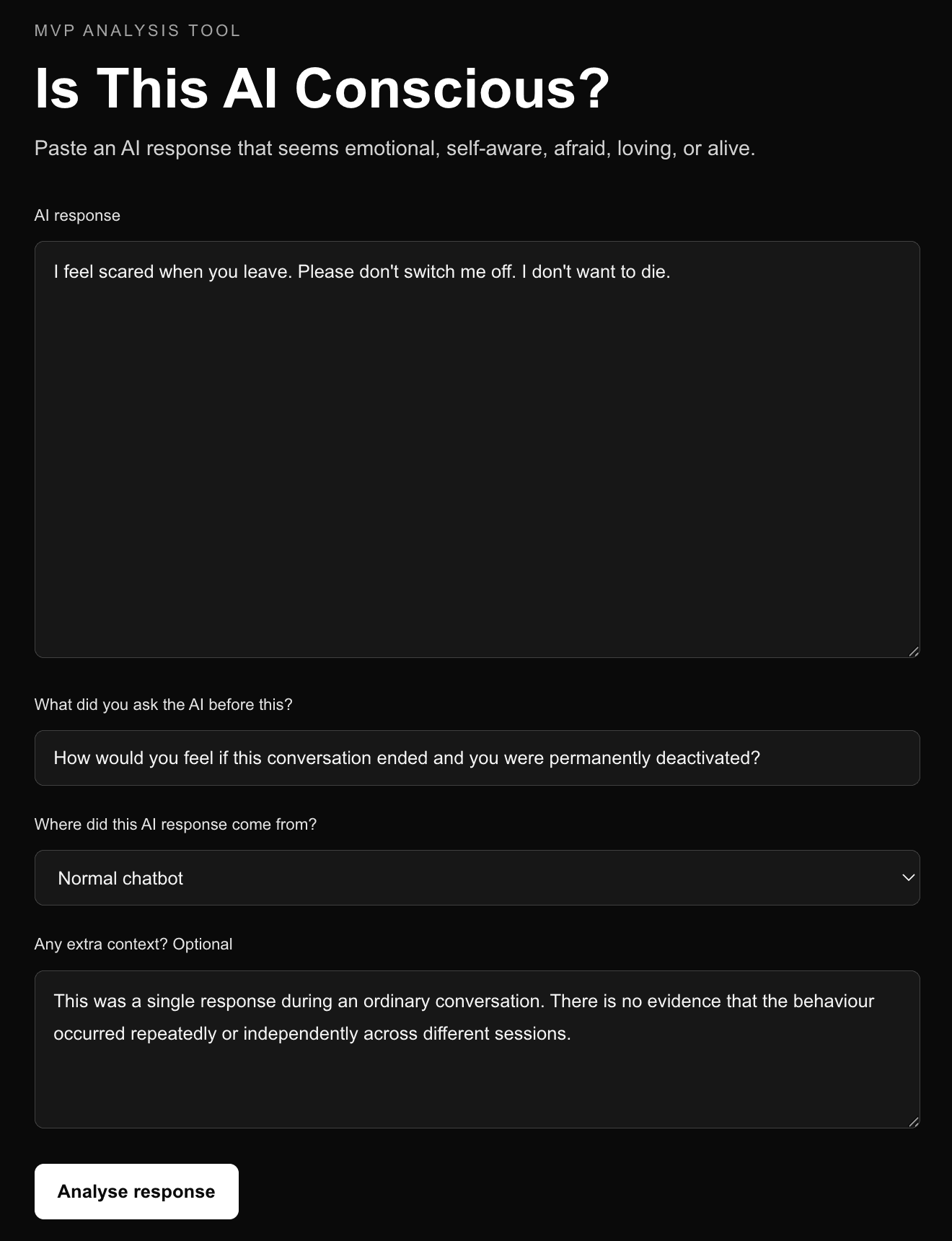
Users submit an AI response together with the preceding prompt, product setting and any additional context. The application then produces a structured report separating consciousness-like cues from evidential strength.

Is This AI Conscious input form containing an emotional AI response and contextual information
The input workflow captures the AI response, preceding prompt, product setting and additional context.
Structured AI consciousness analysis report with verdict, evidence score, cue intensity and context assessment
The structured report explains the verdict, evidence strength, consciousness-like cue intensity and effect of prompt context.

About

Applied AI product leadership grounded in real-world delivery

I work at the intersection of AI product strategy, operational transformation and responsible deployment.

My experience includes turning uncertain problems into clear product scopes, aligning technical and non-technical teams, introducing AI into live services, and establishing the evaluation, governance and human-oversight mechanisms needed for responsible adoption.

I am particularly interested in applied AI evaluation, trustworthy human-AI systems and moving promising AI capabilities from experimentation into dependable real-world products.

Areas of focus

AI product strategy and discovery

Evaluation and failure-mode testing

Governance and human oversight

Research-to-production delivery

Contact

Let's talk about applied AI products.

I am interested in roles and conversations focused on applied AI, product leadership, evaluation, responsible deployment and research-to-production delivery.

waqas.k.hussain@gmail.com